If you have been watching new condo development in the San Gabriel Valley, you have probably noticed a shift. Today’s projects are not just about adding housing units. They are being designed around how you actually live, work, gather, and move through your day. If you are comparing new-construction options or trying to understand what feels current in this market, these design trends can help you spot lasting value. Let’s dive in.
Mixed-Use Design Leads the Way
Across the San Gabriel Valley, new condo projects are increasingly tied to mixed-use corridors instead of standing alone as housing-only buildings. In San Gabriel, city project pages show this pattern clearly with projects like Pacific Square, which includes condos, live-work units, commercial space, and a central park, along with other developments that combine residential space with retail, restaurants, hotel uses, or affordable units.
This trend matters because it shapes the day-to-day experience of condo living. When a building is planned with shared public space and nearby shops or services, the design supports a more connected and convenient routine. For buyers who want low-maintenance living without giving up access to neighborhood activity, that combination is becoming a major draw.
For a brand like MW Lofts Pasadena, this aligns with a broader lifestyle-first approach. Newer condo communities are increasingly expected to pair thoughtful architecture with street-level activity, walkability, and amenity programming that feels integrated into the surrounding area.
Warm Materials Replace Sterile Finishes
One of the biggest design shifts is visual and tactile. New condo design is moving away from cold, overly minimal finishes and toward warmer palettes and more layered materials. According to NAHB’s 2025 design trend coverage, warm, rich materials and biophilic design are helping shape current residential projects.
That means you are more likely to see earthy neutrals, wood-inspired finishes, stone textures, and softer visual contrasts instead of spaces that feel flat or overly corporate. Multifamily Executive also points to rough-hewn wood, stone, metal, and natural texture as key elements in multifamily design.
In practical terms, this creates condo spaces that feel more personal and more residential. Lobbies, lounges, and common areas are being designed with comfort in mind, not just appearance. For you as a buyer, that can make a real difference in how welcoming a building feels over time.
Rooftop and Courtyard Space Matter More
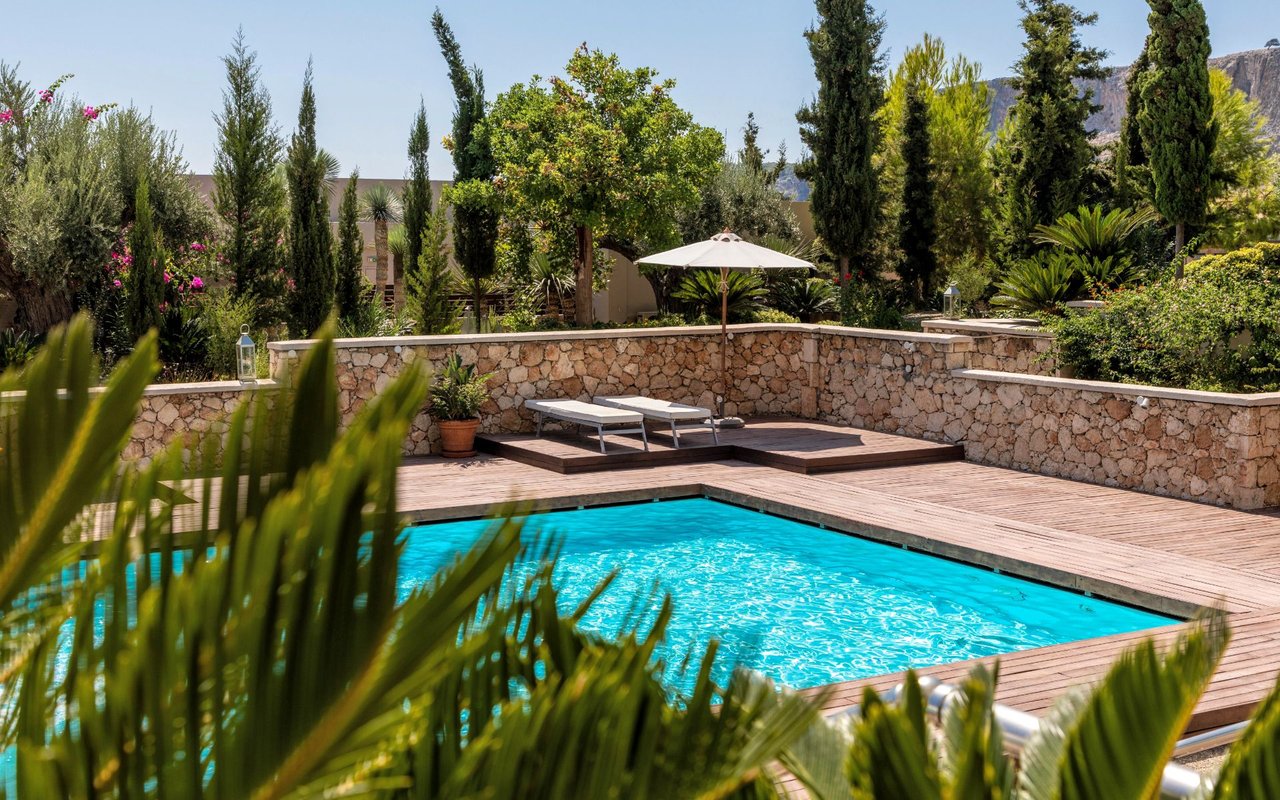
Shared outdoor space has become a defining feature in new condo communities. Rooftop entertaining areas remain one of the top trends for 2025, according to NAHB. Local planning standards in nearby SGV cities also reinforce the importance of common open space, including rooftops, courtyards, terraces, pools, and indoor amenity areas.
This is more than a luxury add-on. Shared outdoor areas give residents room to relax, gather, and enjoy fresh air without the upkeep of a private yard. That is especially important if you are downsizing from a larger home or looking for a lock-and-leave lifestyle with more convenience.
Recent project planning in Pasadena reflects this direction. The proposed 490-510 North Lake Avenue project includes more than 12,000 square feet of community space, including private balconies, a pool deck, and a recreation room. In San Gabriel, Pacific Square also includes a central park area, showing how outdoor gathering space is becoming part of the core design package.
For buyers considering design-forward condo living, this trend lines up closely with what makes amenity-rich communities appealing in the first place. Well-planned rooftops, lounges, and open-air spaces can extend your living area well beyond your front door.
Coworking Space Gets Smarter
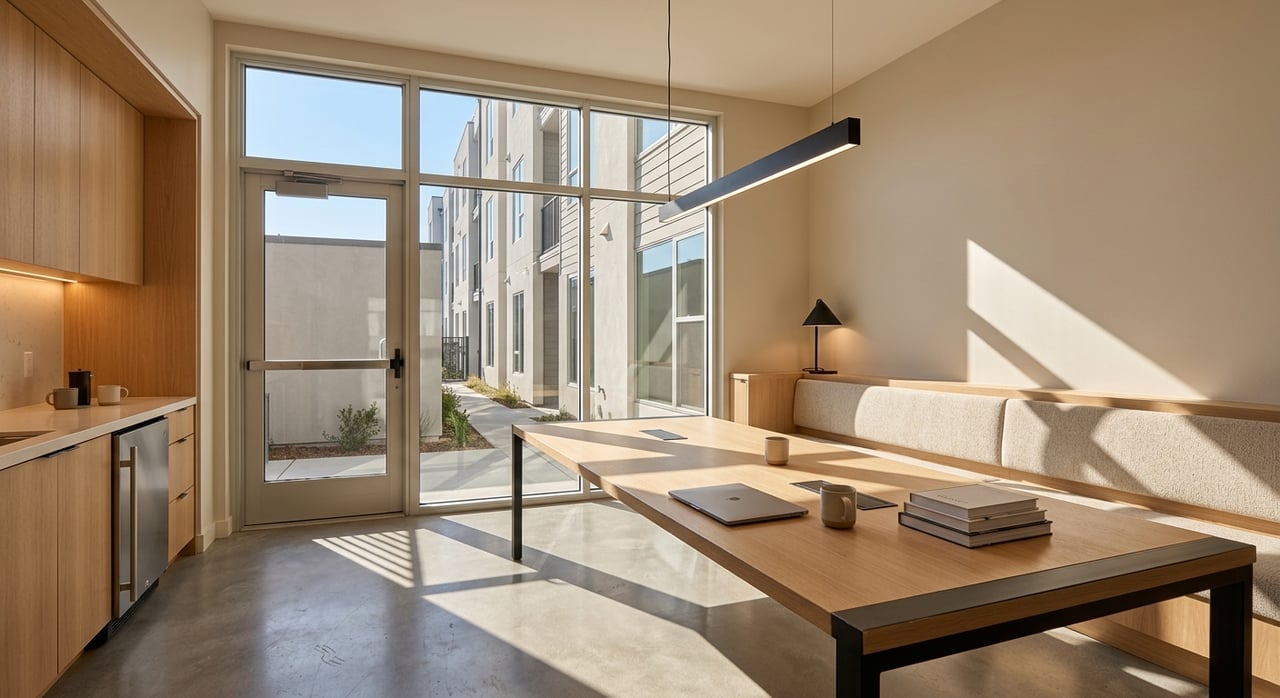
Work-from-home design is also evolving. Instead of treating coworking as a simple lounge with tables, newer projects are paying more attention to privacy, acoustics, and flexibility. Multifamily Executive notes that residents increasingly want quiet, sound-buffered spaces for virtual meetings and focused work.
That shift makes sense if your home now needs to support more than one routine. You may need a place to answer calls, work remotely a few days a week, or simply step into a quieter setting without leaving the building. In that context, coworking becomes less about trendiness and more about function.
It also supports long-term adaptability. Buildings that can accommodate changing work habits tend to stay relevant longer, which can matter if you are buying with future resale appeal in mind.
Smart-Home Features Are Expected
Smart-home technology is no longer a niche upgrade in new condo projects. It is increasingly part of the baseline value proposition. In Cox’s 2024 multifamily survey, 97.4% of property decision-makers said new technology improved resident satisfaction and helped attract residents.
The most valued features included:
- Smart thermostats
- Secure package delivery or smart lockers
- Smart locks or keyless entry
- Water leak detectors
- Resident communication apps or portals
These features support convenience, security, and day-to-day ease. If you are balancing work, travel, or a busy household schedule, simple tools like keyless entry or app-based access can make condo living feel much more seamless.
Multifamily Executive also highlights growing demand for video doorbells, smart locks, leak detection, and app-based control of lighting, energy, temperature, and security. For today’s buyer, those features often feel less like extras and more like part of a modern standard.
Wellness and Sustainability Shape Design Choices
Another major trend is the blending of wellness and sustainability. New condos are being designed with greater attention to natural light, greenery, air quality, acoustics, and thermal comfort. NAHB’s architectural trend coverage points to natural light, greenery, and organic materials as part of the broader move toward biophilic design.
Locally, planning standards support that direction through landscaping and open-space requirements. Alhambra’s mixed-use standards require live planting in street-facing yards and parkways, while Pasadena project documents call for drought-tolerant or native-adaptive planting in residential development.
For you, this shows up in practical ways. Better light can make interiors feel larger and more comfortable. Better acoustics can improve privacy. Thoughtful landscaping and drought-tolerant planting can make a property more resilient while also improving the look and feel of shared outdoor areas.
Flexibility Is the Lasting Trend
If there is one theme connecting all of these design choices, it is flexibility. The most current condo projects in the San Gabriel Valley are not built around one signature look. They are designed to support changing routines, whether that means remote work, outdoor gathering, package delivery, or low-maintenance living.
That is one reason newer communities with strong amenity planning, curated finishes, and adaptable shared space continue to stand out. As Multifamily Executive notes, user-centric and adaptable projects tend to perform better over time because they stay relevant as needs evolve.
If you are shopping for a new condo in or around the San Gabriel Valley, it helps to look past surface style. Pay attention to how a building balances materials, shared spaces, technology, and everyday usability. The best projects do not just look current today. They are designed to work well for how you live tomorrow.
If you want help evaluating new-construction condo opportunities with an eye for design, functionality, and long-term appeal, connect with Pinnacle Real Estate Group to explore your options.
FAQs
What design trends are shaping new condos in the San Gabriel Valley?
- New condos in the San Gabriel Valley are increasingly defined by mixed-use planning, warmer material palettes, rooftop or courtyard amenities, smarter coworking spaces, smart-home technology, and wellness-focused design.
Why are mixed-use condo projects common in the San Gabriel Valley?
- Mixed-use condo projects are becoming more common because local developments increasingly combine residential space with retail, restaurants, live-work units, and shared open space to support a more connected daily lifestyle.
What amenities are popular in new San Gabriel Valley condo buildings?
- Popular amenities in newer condo buildings include rooftop decks, courtyards, lounges, recreation rooms, coworking areas, private balconies, and shared outdoor gathering spaces.
What smart-home features should you expect in a new condo?
- In many new condos, you can expect features like smart thermostats, keyless entry, secure package systems, leak detectors, and app-based tools for communication or home control.
How does condo design affect long-term value?
- Condo design can support long-term value when it prioritizes flexible layouts, useful shared amenities, durable materials, and features that match how people live and work today.