What if your home worked more like a well-designed landing pad than another long list of chores? If you spend your week moving between offices, job sites, airports, or freeway routes near City of Industry, a low-maintenance home base can make daily life feel simpler and more predictable. The right condo setup can help you save time, reduce upkeep, and create a calmer routine from the moment you walk in the door. Let’s take a closer look.
Why City of Industry Fits This Lifestyle
City of Industry is not a typical residential suburb. According to city materials, it is 92% industrial and 8% commercial, with a 12-square-mile footprint and a small residential population. That tells you a lot about the area’s practical appeal: this location is built around access and movement.
The city also highlights direct access to the 60, 605, 57, and 10 freeways. It sits near the meeting point of Los Angeles, Orange, San Bernardino, and Riverside counties, which makes it especially useful if your week takes you across multiple parts of Southern California. In that context, a condo near City of Industry can serve as an efficient home base rather than a high-upkeep property.
City materials also note the presence of more than 2,500 businesses, along with proximity to rail lines, airports, and the ports. If your schedule is transit-heavy, the value of your home often comes down to convenience at the edges of the day. Easy parking, secure access, and fewer exterior chores can matter more than extra square footage you rarely use.
What Low-Maintenance Really Means
Low-maintenance living does not mean zero responsibility. In a California condo, upkeep is usually shared between you and the homeowners association, which is often called the HOA. The key is understanding where your responsibilities end and where the association’s begin.
The California Department of Real Estate explains that homeowners are usually responsible for their own unit interiors, including items like interior paint, carpeting, and kitchen counters. The association typically handles common areas and long-term replacement of shared components. Common areas often include landscaping, parking areas, outdoor lighting, drainage gutters, and recreation facilities.
That split can be a real advantage if you want fewer weekend chores. You may not need to worry about mowing, exterior painting, or maintaining shared drives and lighting. But you still need to care for the interior of your unit and stay informed about building rules and costs.
Understand HOA Rules Before You Buy
In California, HOAs operate through CC&Rs, bylaws, and board rules. The California Attorney General notes that the Davis-Stirling Common Interest Development Act governs HOA requirements and owner rights in areas such as finances, maintenance, elections, and dispute resolution. That means condo living comes with a structured set of expectations.
For many buyers, that structure adds predictability. Rules can cover parking, exterior changes, pets, rentals, and other daily-use issues. A smoother ownership experience often starts with choosing a building whose rules fit your actual routine, not your idealized one.
Before you buy, review the HOA documents carefully. If you travel often, rely on guest parking, drive an EV, or want a pet-friendly routine, those details matter. A low-maintenance lifestyle feels easiest when the building supports how you already live.
Focus on Time-Saving Amenities
Near City of Industry, the best amenities are often the least flashy. They are the features that quietly remove friction from your weekday routine. When your priority is getting in, getting out, and coming home without extra hassle, practical amenities can add real value.
Look closely at features like:
- Secure building or gate access
- Attached, covered, or assigned parking
- Elevator access
- Convenient trash and recycling areas
- Package receiving or secure package storage
- Guest parking
- EV charging availability
These features can save time over and over again. They also align with what many buyers want from a lock-and-leave home: fewer errands, less stress, and a simpler return home after a long day.
Ask the Right Maintenance Questions
Some condo features look private but may not be fully yours to manage. The California Department of Real Estate notes that balconies, patios, shutters, awnings, windows, and exterior doors can be classified as exclusive-use common area. That means you may have access to them, but maintenance responsibility can vary.
This is an important detail for anyone trying to design a truly low-maintenance setup. Before you count a balcony as your easy outdoor retreat, confirm who maintains surfaces, railings, drains, and attached fixtures. It is always better to verify than to assume.
You should also ask whether the HOA has a reserve study and how it plans for future repairs. Reserve studies help distinguish everyday operating costs from long-term replacement funds. A building that plans ahead may be better positioned to avoid surprise assessments.
Design Your Interior for Easy Living
Once the building itself supports a low-upkeep lifestyle, your interior choices can make daily living even easier. City of Industry’s fact page lists average annual rainfall at 14.78 inches and an average temperature of 77 degrees. In practical terms, that makes it smart to treat your home as a simple, efficient base with easy-care materials and flexible living zones.
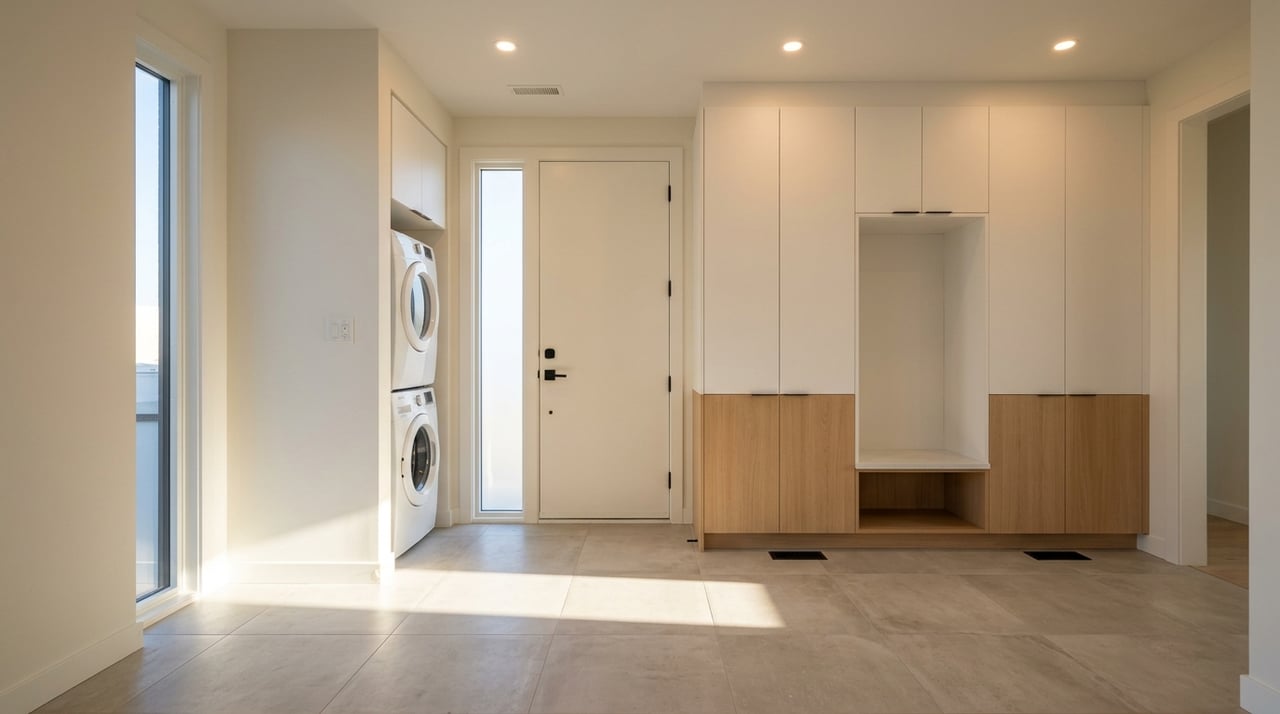
Start with the entry. If your mornings move fast, an organized landing zone can save real time. A small console, closed cabinet, or bench with storage can keep shoes, bags, packages, and charging cords from taking over the room.
Closets deserve the same attention. Built-in or modular closet systems can cut down on clutter and help you get out the door more quickly. The easier it is to find what you need, the less your home slows you down.
Choose Finishes That Clean Fast
Kitchens and baths usually take the most wear during the workweek. Durable surfaces can help you spend less time maintaining them. Easy-clean counters, wipeable backsplash materials, and practical flooring choices can all support a more effortless routine.
Low-pile rugs are another smart option. They are generally easier to clean than thicker styles and can help busy spaces feel finished without creating extra work. The goal is not to make your home feel plain. It is to make it feel polished without requiring constant attention.
Furniture can help too. In a condo, multi-use pieces often outperform oversized statement items.
Consider options like:
- Storage ottomans
- Nesting tables
- Wall-mounted media storage
- A desk that can also serve as a dining or laptop surface
- Bedside storage that reduces visible clutter
Keep Outdoor Areas Simple
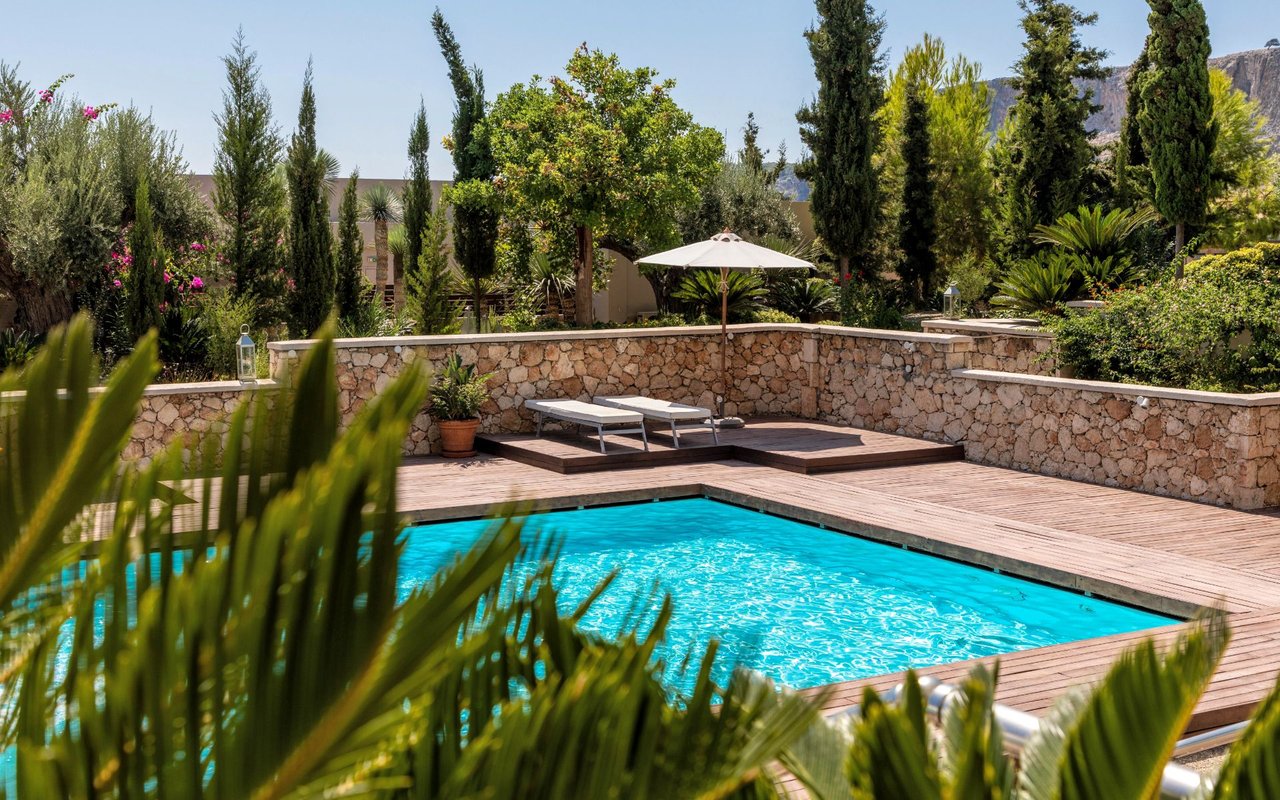
If your unit has a balcony or patio, think of it as a small extension of your living area rather than a full outdoor project. Weather-resistant seating and easy-clean surfaces can give you a comfortable pause space without creating another maintenance zone. This approach fits the climate and supports the lock-and-leave mindset.
Try to avoid turning a compact outdoor area into a chore-heavy garden. Large planters, permanent fixtures, and specialty materials may require more upkeep than you want. They may also raise maintenance or approval questions if the area falls under exclusive-use common area rules.
A simpler setup often works best. A few durable pieces, a clean layout, and a calm visual feel can do more for everyday enjoyment than a crowded design.
Understand Condo Insurance Basics
Insurance is another part of low-maintenance ownership that deserves attention upfront. The California Department of Insurance says condo structures are normally insured through the association, while unit owners typically need an HO-6 or similar policy for the interior portion of the unit. That split is important because it affects both your budget and your peace of mind.
The department also notes that HOA coverage may not extend to earthquake damage involving common areas and exterior structures. In California, that makes it wise to ask specific questions about earthquake coverage and deductibles before you buy. A building may look turnkey on the surface, but your risk picture depends on the details.
When reviewing a condo, ask what the master policy covers and what type of individual policy owners typically carry. A little clarity here can prevent expensive surprises later.
How to Spot a Good Home Base
A strong condo near City of Industry should support your routine in simple, visible ways. It should make arrivals easy, departures quick, and maintenance manageable. You are not just buying square footage. You are choosing how much friction your home adds or removes from daily life.
As you compare options, keep your priorities grounded in how you actually live. A polished, well-planned condo with practical amenities and easy-care interiors may deliver more value than a larger home with more upkeep. For many buyers in this area, convenience is not a bonus. It is the point.
If you are looking for a design-forward, low-maintenance lifestyle in greater Los Angeles, Pinnacle Real Estate Group can help you explore homes that align with how you want to live.
FAQs
What does low-maintenance condo living near City of Industry usually mean?
- It usually means fewer exterior chores because the HOA often maintains shared areas like landscaping, parking areas, and outdoor lighting, while you remain responsible for your unit interior.
What HOA documents should condo buyers in California review?
- You should review the CC&Rs, bylaws, rules, financial information, and reserve-related documents so you can understand maintenance duties, restrictions, and how the association plans for future repairs.
Which condo amenities save the most time for commuters near City of Industry?
- Features like secure access, assigned parking, elevator access, package handling, convenient trash and recycling, guest parking, and EV charging can reduce everyday hassle.
Who maintains a condo balcony or patio in California?
- It depends on how the HOA documents classify that space, because balconies and patios may be considered exclusive-use common area with maintenance responsibilities defined by the association documents.
What insurance should condo buyers ask about in California?
- You should ask what the HOA master policy covers, whether owners typically need an HO-6 policy for the unit interior, and how earthquake coverage and deductibles are handled.
What interior features make a condo easier to maintain?
- Entry storage, organized closets, durable counters, wipeable backsplash materials, low-pile rugs, and multi-use furniture can all help reduce clutter and cleaning time.