You can fall in love with a model home in seconds. The challenge is knowing if those finishes will still look and perform great in year five. In central Pasadena, where walkability and design matter, smart evaluation helps you separate true quality from clever staging. This guide gives you a clear, step-by-step way to assess finishes in new-construction condos, ask the right questions, and make confident choices for daily living and future resale. Let’s dive in.
Pasadena context: why finishes matter
Central Pasadena, including Old Pasadena and the Playhouse District, rewards finishes that balance durability with urban style. Proximity to transit, restaurants and cultural venues can boost appeal and resale, so you want materials that wear well and photograph well. Many buyers compare multiple projects and upgrade menus, which makes clarity about base specs, brands and model numbers essential. A finish that looks similar across projects can vary a lot in installation quality and long-term maintenance.
Rules that shape what you see
California codes influence many standard choices in new buildings. Builders design to meet energy and green standards, which affects windows, lighting, ventilation and water fixtures.
- Title 24 sets energy performance for HVAC, water heating, lighting and windows. You will see efficient mechanicals and LED lighting as a result. Learn more from the California Energy Commission’s overview of Title 24 Building Energy Efficiency Standards.
- CALGreen requires water efficiency, waste reduction and ventilation measures that affect fixtures and materials. Review the California Department of Housing and Community Development’s CALGreen standards.
- Local planning and project approvals can influence layouts, balconies, parking and storage, which in turn affect finish choices. See the City of Pasadena’s Planning & Community Development for context.
Prepare before your visit
Request key documents so you can compare apples to apples:
- Builder’s base-spec sheet and written upgrade menu with pricing
- Appliance, window, HVAC and fixture brands and model numbers
- Cabinet manufacturer and series, countertop material spec sheets
- Warranty documents and who handles claims
- Draft HOA budget, what fees cover and any reserve study
- Unit stack and exposure details (floor, orientation, adjacent spaces)
Ask the builder to mark which items in the model are upgrades, and to provide photos of actual inventory units when possible.
Finish-by-finish checklist
Use this simple framework during tours or virtual walk-throughs. Operate, look and feel for quality. Ask for spec sheets to back up what you see.
Flooring
- What to expect: Luxury vinyl plank (LVP), engineered hardwood and porcelain tile are common, with carpet often in bedrooms.
- Checks you can do:
- Ask how each floor is installed (floating, glued or nailed), since it affects sound and repair.
- Inspect transitions between rooms for smooth thresholds and clean cuts.
- Ask for thickness and wear layer (LVP) or veneer thickness (engineered wood), plus care instructions.
- In kitchens and baths, confirm water resistance and repair approach.
- Why it matters: LVP is durable and moisture resistant. Engineered hardwood reads higher-end but can be more sensitive to moisture. Flooring choices affect perceived quality and future replacement cost.
Cabinetry and built-ins
- What to expect: Plywood cabinet boxes and dovetail drawers signal quality; full-extension, soft-close hardware is a plus.
- Checks you can do:
- Open every door and drawer to test alignment and soft-close action.
- Look inside for plywood bottoms and solid joinery rather than visible staples.
- Check reveal lines for consistency; uneven gaps suggest rushed installation.
- Request manufacturer and series, plus spec sheets. For construction best practices, the NKBA offers widely used guidance.
- Why it matters: Durable cabinet construction is hard and costly to change later, and it supports resale appeal.
Countertops and backsplashes
- What to expect: Engineered quartz is common for low maintenance; natural stone may require sealing.
- Checks you can do:
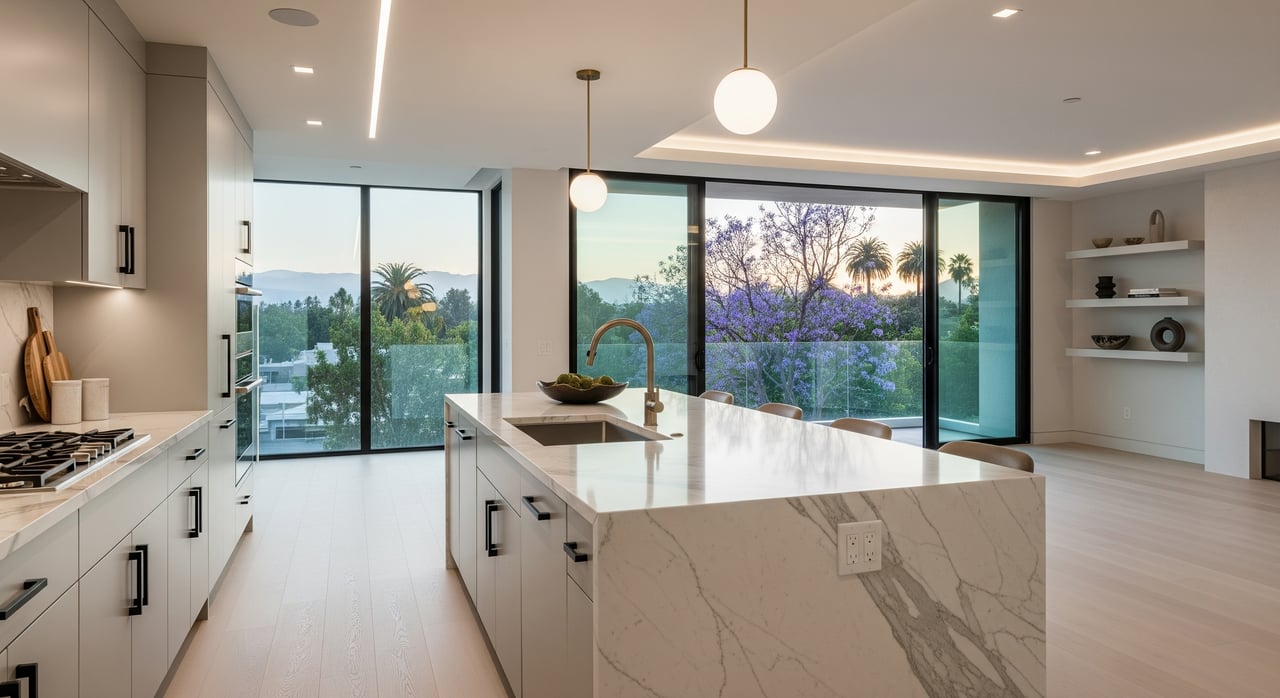
- Study seam placement and pattern match, especially on islands and corners.
- Confirm backsplash height and edge profiles. Thicker edges and clean finishing read higher-end.
- Ask about slab thickness and care requirements.
- Why it matters: Good fabrication and thoughtful detail elevate the kitchen’s feel and photos.
Appliances and mechanicals
- What to expect: Brand-name appliance packages with a focus on energy efficiency.
- Checks you can do:
- Request model numbers and confirm ENERGY STAR where applicable.
- Verify range hood ventilation is ducted to the exterior if you cook often.
- Confirm clearances and door swings work for daily use.
- Ask about appliance warranties and registration steps. To compare reliability, you can look up model ratings with Consumer Reports.
- Why it matters: Efficient, reliable appliances reduce operating costs and headaches.
Lighting and electrical
- What to expect: LED fixtures are standard under energy codes.
- Checks you can do:
- Count outlets and switches in work areas and bedrooms; ask about USB outlets and dimmers.
- Confirm which fixtures are included versus shown as staging in the model.
- Request a lighting or electrical plan if available.
- Why it matters: Well-placed lighting and power make a compact urban home flexible and comfortable. Adding circuits later can be expensive.
Windows, doors and natural light
- What to expect: Double-pane, low-E windows are typical for comfort and efficiency.
- Checks you can do:
- Open and close windows and balcony doors for smooth operation and balanced sashes.
- Inspect weather-stripping and thresholds for tight seals.
- Ask for manufacturer and specs, including any sound or thermal ratings.
- Why it matters: Energy-efficient windows lower utility use and improve comfort, especially along active streets.
Bathrooms: tile and fixtures
- What to expect: Porcelain tile, glass enclosures and quality valves are strong signs of durability.
- Checks you can do:
- Check if shower tile goes to the ceiling, and inspect grout lines and caulking for consistency.
- Look for proper slope to the drain and clean trim at niches.
- Run water to test pressure and temperature control where possible. Confirm fan capacity and operation for ventilation.
- Why it matters: Moisture control preserves finishes and prevents repairs. Tile-to-ceiling and framed glass often read higher-end.
Plumbing and water efficiency
- What to expect: Low-flow fixtures are common under CALGreen.
- Checks you can do:
- Note fixture brands and flow rates; ask for model numbers.
- Ask if water heating is tankless, heat pump or conventional, and where access panels and shut-offs are located.
- Why it matters: Efficient fixtures and quality valves reduce utility use and leak risk.
Balconies and exterior details
- Checks you can do:
- Confirm balcony drainage, waterproofing at door thresholds and any surface coverings.
- Inspect railing materials and attachment points for durability.
- Why it matters: Proper waterproofing protects your home and neighbors below, which also ties to HOA maintenance exposure.
Soundproofing and separation
- Checks you can do:
- Ask for any published STC/IIC ratings for walls and floor assemblies.
- In person, stand in bedrooms and living areas with doors closed to gauge corridor and neighboring noise.
- Why it matters: Sound control is a major livability factor in multi-family buildings and supports resale value.
Common areas and elevators
- Checks you can do:
- Review lobby, corridors and amenity finishes for durability and ease of upkeep.
- Look at elevator cab finishes and door hardware.
- Why it matters: Building-level quality affects daily experience and long-term HOA costs.
Touring virtually with confidence
If you cannot visit in person, ask for a live video walk-through so you can direct the camera to thresholds, seams and mechanical closets. Request close-up photos of countertop seams, cabinet interiors, tile corners and balcony thresholds. Ask the builder to annotate what in the model is an upgrade, with prices, and to send full spec sheets and model numbers. If an inventory unit is done, ask for photos of that exact unit.
Warranties and HOA: read the fine print
Many reputable builders follow a “1-2-10” style approach in some form, often one year for fit and finish, two for systems and ten for structural items. Always confirm the exact coverage in writing and who handles claims. For context on common practices, the National Association of Home Builders outlines typical builder warranties. Review the HOA budget and what fees cover, including amenities and future reserves. Strong reserves and sensible common-area materials can reduce surprise assessments. For general condo ownership resources, visit HUD’s condominium basics.
Decision framework for finishes
A simple weighting can help you compare projects and packages:
- Durability and maintenance: 30 percent
- Build quality and installation: 25 percent
- Energy efficiency and systems: 15 percent
- Style and aesthetic fit: 15 percent
- Resale appeal and market fit: 15 percent
If you plan to live in the home long term, favor durable surfaces and efficient systems that keep operating costs down. If you expect to resell within a few years, lean into neutral, broadly appealing finishes and document any upgrades you add.
Upgrade value and resale
Always ask for written upgrade pricing. Many aesthetic upgrades deliver lifestyle enjoyment but limited resale lift. Structural and systems improvements, like better windows, improved acoustics or higher-quality cabinetry, are harder to change later and often provide stronger long-term value. For replacement cost context, see Remodeling’s Cost vs. Value reports.
Red flags and reasonable tradeoffs
Red flags
- Vague specs, no model numbers or resistance to sharing written inclusions
- Visible fit-and-finish issues in the model dismissed as “normal”
- No clear warranty documents or unclear claim process
- Non-ducted kitchen hoods in spaces designed for frequent cooking
- No documentation or unwillingness to discuss sound mitigation
Reasonable tradeoffs
- Decorative tile patterns, paint colors and light fixtures can be changed later.
- Cabinet box quality, window performance, acoustic assemblies and ventilation are harder and more expensive to upgrade, so prioritize them now.
Next steps
Bring this checklist to your next tour in the Playhouse District or Old Pasadena. Ask for spec sheets, operate everything you can and compare base vs. upgrades side by side. A clear view of construction quality today helps protect your comfort and resale tomorrow.
If you want a guided, side-by-side comparison of finishes in central Pasadena and help weighing upgrade choices, connect with the experienced local team at Pinnacle Real Estate Group. They can arrange tours, gather specs and help you make the move that fits your lifestyle.
FAQs
What should I request from a Pasadena condo builder before touring?
- Ask for the base-spec sheet, written upgrade menu with prices, appliance and fixture model numbers, warranty documents, HOA draft budget and a plan showing your unit’s stack and exposure.
How do California codes affect condo finishes and fixtures?
- Title 24 promotes efficient HVAC, lighting and windows, and CALGreen guides water efficiency and ventilation, so you will often see LED lighting, low-flow fixtures and double-pane, low-E windows as standard.
What kitchen details signal higher quality in new construction?
- Look for plywood cabinet boxes, dovetail drawers, full-extension soft-close hardware, well-matched countertop seams and a ducted range hood with adequate clearance.
How can I check soundproofing in a condo building?
- Ask for published STC/IIC ratings and construction details like acoustic mats or resilient channels, then stand quietly in bedrooms and living areas during a tour to gauge corridor and neighbor noise.
What warranties are typical for new-condo purchases?
- Many builders use a version of 1-year workmanship, 2-year systems and 10-year structural coverage; always verify the exact terms in writing and who manages claims.