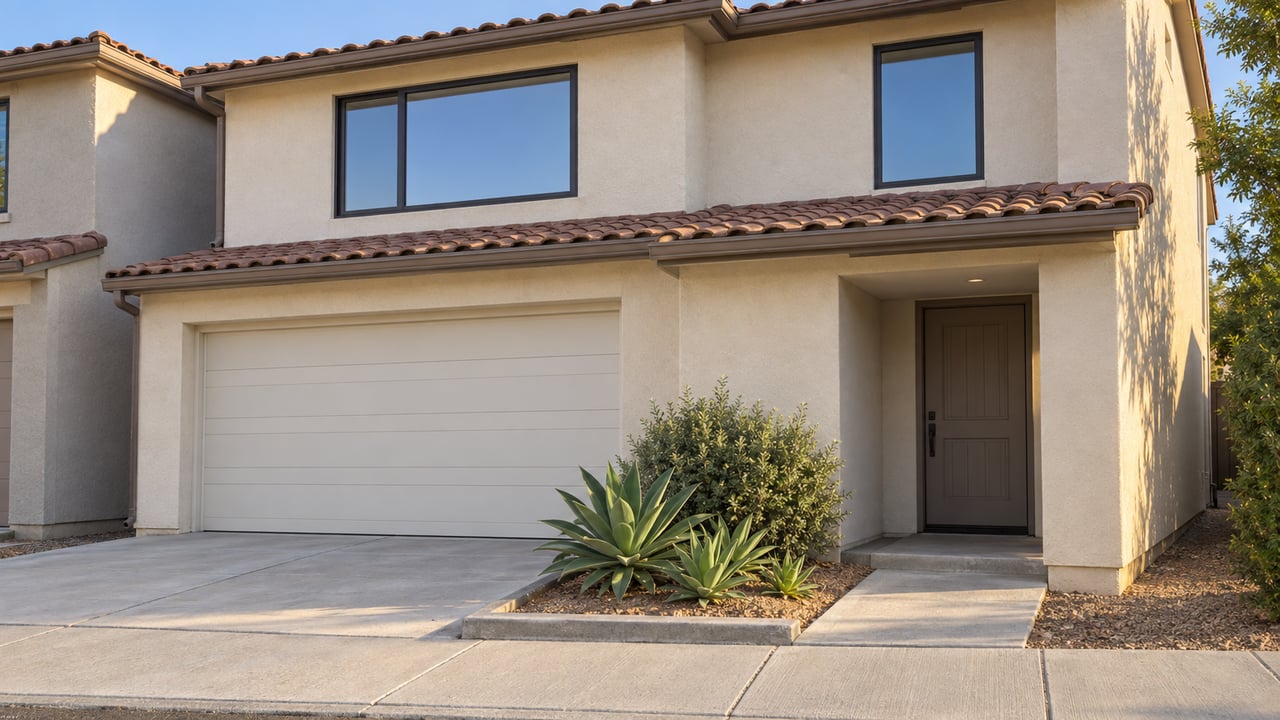
Two listings land in the same saved search. Both are three-bedroom homes in Irvine, both listed within $15,000 of each other, both roughly 1,800 square feet. One sits in Great Park. The other sits in Woodbury. A buyer scrolling past the price per square foot assumes the tax line under each listing is the same kind of charge at a different age, a Mello-Roos bill that started higher in the newer village and will eventually fade the same way in both places. That assumption is wrong for at least one of those two homes, and the reason has nothing to do with the price of either house.
Irvine runs two separate government financing tools side by side, and the city's own administrative pages spell out the difference. Some Irvine neighborhoods were built using Community Facilities Districts, the mechanism most people mean when they say Mello-Roos. Others were built using 1913/1915 Act Assessment Districts, an older and legally distinct tool authorized under the California Streets and Highways Code. Both show up on a tax bill as a special charge tied to the parcel. Neither one is negotiable. But they are not the same instrument, they were not formed on the same schedule, and at least one of them does not disappear the way most buyers expect.
One Tax Bill, Two Different Government Tools
According to the City of Irvine's own administrative services page, districts like Woodbury (Assessment District 03-19), Stonegate (Assessment District 07-22), Orchard Hills (Assessment District 05-21), Oak Creek (Assessment District 94-13), Westpark II (Assessment District 94-15), Cypress Village (Assessment District 11-24), and Eastwood (Assessment District 13-25) were formed under the 1913/1915 Act framework. Great Park and its surrounding neighborhoods, by contrast, sit inside CFD No. 2013-3, a true Mello-Roos Community Facilities District. Portola Springs carries its own CFD numbers (06-1 and 09-1), and parts of Woodbury and Stonegate also carry separate CFD charges layered on top of their assessment district obligations.
That distinction matters because assessment districts and CFDs retire differently. A 1913/1915 Act assessment is a fixed bond obligation with a defined payoff date built into the original bond sale. A Mello-Roos CFD special tax is set by a Rate and Method of Apportionment that the district's governing body can structure however it authorized at formation, including what happens after the original bonds are paid.
What Great Park's CFD Actually Does at Year 40
The City of Irvine formed CFD No. 2013-3 in 2013 in partnership with Heritage Fields El Toro, LLC, specifically to fund the conversion of the former El Toro Marine Corps Air Station into the Great Park and its surrounding neighborhoods. The city's own Great Park page explains that this CFD carries two ongoing jobs: repaying the original construction bonds and funding permanent maintenance of the public improvements those bonds built.
Here is the detail that gets lost in most generic explainers of Mello-Roos. Once the original bonds are repaid, which the city states typically takes about 40 years, the charge does not go to zero. It drops by somewhere between 65 and 82 percent, with the remainder continuing indefinitely to fund ongoing maintenance. A buyer who signs up for Great Park in 2026 is not looking at a tax that quietly disappears sometime in the 2060s. They are looking at a tax that shrinks substantially and then keeps going.
Compare that to Portola Springs, where CFD No. 09-1 was formed in 2009. As of 2026, that district is roughly 13 to 17 years into a 30-year bond term, meaning a meaningful stretch of the obligation still remains, but the underlying structure is a conventional bond payoff rather than the perpetual-maintenance design built into the Great Park CFD.
What Buyers Actually Compare, Village by Village
| Village | District type | Formation era | What happens at payoff |
|---|---|---|---|
| Great Park Neighborhoods | CFD No. 2013-3 | 2013 | Bonds retire in about 40 years; charge drops 65-82%, remainder continues for maintenance |
| Portola Springs | CFD No. 09-1 (2009) / 06-1 | Late 2000s | Standard 30-year bond term; roughly halfway through as of 2026 |
| Woodbury | Assessment District 03-19 plus CFD 04-1/04-2 | Early 2000s | 1913/1915 Act bonds retire on a fixed schedule; some parcels also carry a separate CFD layer |
| Stonegate | Assessment District 07-22 plus CFD (Stonegate Apartments 08-1 for rental parcels) | Mid-to-late 2000s | Earlier formation than Great Park means closer to bond payoff |
| Orchard Hills | Assessment District 05-21 | Mid-2000s | 1913/1915 Act structure, earlier in the city's build-out than Great Park |
| Oak Creek / Westpark II | Assessment District 94-13 / 94-15 | Mid-1990s | Among the city's earliest districts, closer to or past full retirement |
Buyers comparing notes on Irvine forums have also described a real difference in how the charge scales within Great Park itself. Because home size drives the formula there, a smaller attached condo might carry a Mello-Roos bill starting around $7,000 a year, while a larger detached home in the same neighborhood can run closer to $14,000. Portola Springs, Orchard Hills, and Eastwood, by contrast, tend to sit closer to a flatter figure in the range of $3,800 annually regardless of the specific floor plan. Two homes that look like close comps on paper can carry a $10,000 annual gap once the actual tax bill comes back from the parcel lookup.
The Monthly Math Behind the Line Item
None of this is abstract once it hits a loan file. Lenders fold the special tax into your total housing payment the same way they fold in principal, interest, taxes, and insurance, and that payment drives your qualifying debt-to-income ratio. A Mello-Roos charge running $500 a month on top of the mortgage effectively requires tens of thousands of dollars more in annual income to qualify for the same purchase price, because the lender is underwriting the full monthly obligation, not just the loan payment.
In CFD-heavy Irvine zip codes, effective property tax rates, meaning the base 1 percent plus every local assessment stacked on top, commonly run between 1.5 and 1.7 percent of the purchase price. In villages without a CFD or assessment district, that same effective rate typically lands closer to 1.1 to 1.3 percent. Applied to Irvine's median sale price of $1.5 million over the three months ending in August 2026, that half-point gap in effective rate translates to a difference of roughly $7,500 to $9,000 a year in carrying cost, purely from which side of a village boundary the parcel falls on.
That median price, notably, was down 3.2 percent year over year as of August 2026, with price per square foot down 6.2 percent over the same period. Sticker prices across Irvine have softened slightly. The special tax formulas have not. A CFD or assessment district charge is set at formation and typically escalates on its own schedule, often up to 2 percent a year, independent of what the home is worth or what it sold for last year. As citywide prices compress, the tax gap between villages becomes a proportionally larger share of the total cost difference between two otherwise comparable homes, not a smaller one.
Why "Older Means No Mello-Roos" Isn't Quite Right
It is common to hear that Irvine's older villages, places like Northwood, Turtle Rock, University Park, and most of Woodbridge, simply don't carry Mello-Roos. That is generally true for those specific neighborhoods, but the broader idea that age alone predicts the absence of a special tax misses the assessment district layer. Oak Creek and Westpark II, both formed in 1994 under the 1913/1915 Act, are older Irvine product with a special assessment on the tax bill, just one that has had three decades to work toward payoff rather than the four-decade Mello-Roos timeline running under Great Park.
The Irvine Unified School District's board also continues to actively administer special tax levies tied to several of these districts. Board resolutions adopted for fiscal year 2025-26 authorized continued levies covering Woodbury, Portola Springs, and Stonegate Apartments improvement areas, a reminder that these charges are being renewed and administered on an annual basis right now, not winding down on their own.
What to Ask For Before You Compare Two Listings
A listing price and a square footage number are not enough to compare two Irvine homes on equal footing. Before treating two properties as true comps, it is worth asking escrow or title for the specific CFD or assessment district number attached to the parcel, not just a yes or no answer on whether Mello-Roos applies. The county's own parcel lookup tool at the Orange County Tax Map lets any buyer search a specific address and see the special tax line items attached to it before an offer goes in. From there, the Rate and Method of Apportionment for that specific district shows how the charge is calculated and what happens when the bonds retire, whether that means the charge disappears entirely or steps down to a smaller permanent maintenance fee the way Great Park's does.
FAQ
Does refinancing remove a Mello-Roos or assessment district charge? No. The obligation is tied to the parcel, not the loan or the owner, and it stays in place through a refinance.
Can a buyer pay off the remaining balance early? Some CFDs allow prepayment of the remaining bond balance in a lump sum. Ask the district administrator for a prepayment quote if you plan to hold the home long term.
Is the charge tax deductible? Treatment varies by district and by how the funds are used, and the rules are specific enough that they are worth a conversation with a tax professional rather than a general answer here.
Which Irvine villages currently have no special tax at all? Northwood, Turtle Rock, University Park, and most of Woodbridge are commonly cited as carrying little to no Mello-Roos or assessment district charge, though this should always be confirmed by parcel rather than assumed by neighborhood name.
Two Irvine homes at the same price are rarely carrying the same long-term obligation, and the only way to know which one you are actually comparing is to pull the district number yourself. Dina Gonzalez can pull the exact CFD or assessment district figures for any Irvine address before you write an offer, so the monthly number you're picturing is the one that actually shows up on the bill.