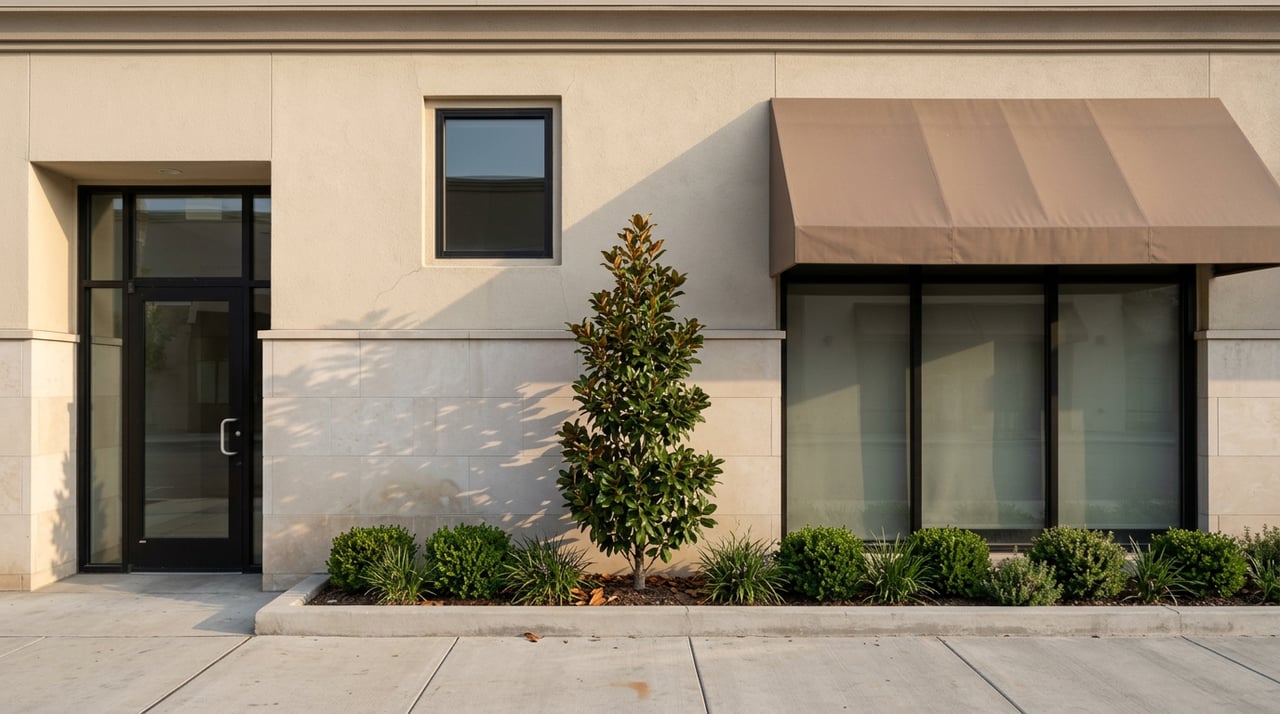
Walk into a finished unit at MW Lofts on El Molino Avenue and everything is calibrated to feel like the opposite of risk. The paint is unmarked. The appliances have never run a cycle. The HOA has never missed a payment because the HOA has never made one. That newness is the entire pitch of buying construction that finished last year instead of a resale that finished in 1987.
But new construction in Pasadena's Playhouse Village does not remove the clock that governs a real estate transaction. It resets it. The building's structural warranty, its homeowners association reserve fund, and even the paperwork you sign at the offer stage all start their countdown the moment escrow closes, and every one of those countdowns is currently running on estimates nobody has tested yet. That is the part of buying brand new that the marketing rarely covers, and it is the part worth understanding before you sign anything in 2026.
What the ten-year warranty actually promises, and when it stops promising it
California's Right to Repair Act, commonly called SB 800, governs every new home and condominium sold in the state since January 1, 2003. It does not read as one blanket warranty. It reads as a stack of separate clocks, each attached to a different part of the building, each running out on its own schedule.
| Component | Warranty period |
|---|---|
| Fit and finish (flooring, paint, trim, countertops) | 1 year from close of escrow |
| Irrigation, drainage, noise standards | 1 year |
| Wood posts, landscaping, dryer ducts | 2 years |
| Plumbing, electrical systems, driveways, stucco and siding | 4 years |
| Exterior paints and stains | 5 years |
| Load-bearing structural components | 10 years from substantial completion |
The ten-year figure is the one buyers remember, because it sounds like a decade of protection. In practice it functions more like an expiration date than a safety net. Construction attorneys who work these cases routinely describe a pattern where homeowners associations wait until close to year nine before filing suit against a developer over defects, because that is the last practical window before the statutory clock runs out. The lawsuit is not a sign the building failed early. It is a sign the calendar is closing.
For a buyer at MW Lofts or any comparable Playhouse Village project completed in the last two or three years, that means the building's real track record on structural performance will not exist for most of the time you own the unit. You are buying protection that is strongest on paper in year one and thinnest in practice as year ten approaches, with almost no public signal in between about whether the building is heading toward a problem.
Your HOA's first budget is a forecast, not a record
The second clock is less visible and arguably more consequential for your monthly costs. Every California common interest development, condominium buildings included, is required under the Davis-Stirling Act to maintain a reserve fund for major repairs and to complete a reserve study establishing how much that fund needs to hold. For an established HOA, that study is built on years of maintenance invoices, actual vendor bids, and a physical inspection of components that have already shown some wear. For a brand-new association, none of that exists.
The California Department of Real Estate's own reserve study guidelines are direct about this gap. A developer's pre-sale reserve budget is built from the construction drawings filed when the project began, not from the building as it was actually built, and the guidance explicitly recommends that number be verified by physical inspection rather than trusted at face value. A new HOA is required to complete its first real reserve study early in the association's life, typically by the end of its first year of operation, precisely because the developer's starting estimate is a forecast rather than a record.
That first real study is the number that will eventually decide whether your monthly dues climb, whether a special assessment shows up in year six, or whether the association's savings actually match its future roof, elevator, and mechanical replacement schedule. Before you sign, it is worth asking the seller or the HOA management company two direct questions: what number was used to set the current dues, and has an actual reserve study been completed since the building was occupied, or is the current budget still running on the developer's original estimate.
What changed at the signing table this year
Two procedural shifts landed on California real estate transactions effective January 1, 2026, and both touch a new-construction condo purchase in Pasadena directly.
The first is Assembly Bill 2992, which now requires a signed buyer-broker agreement before an agent can show you a property, including an open house where your agent is present. It specifies compensation terms, duration, and cancellation rights up front. If you have bought property before 2026, this is a new form in the stack, not a formality to skim past.
The second is Senate Bill 410, which requires that any resale HOA disclosure packet include the building's most recent exterior elevated element inspection report, covering balconies, decks, and exterior stairways. The report has to state the total number of units, whether a statistically significant sample was inspected, and how many elements were flagged as an immediate safety concern. This law is written for resale transactions on buildings old enough to have completed their first inspection cycle. A brand-new building like MW Lofts will not have that report yet because the inspection clock has barely started. But it matters for the same reason the reserve study matters: the day you eventually resell, or the day a future buyer looks at your unit, this report will exist and it will say something concrete about how the building's exterior has held up. Right now, for a brand-new purchase, that page in the file is simply blank.
What "boutique new construction" looks like two blocks away
Playhouse Village is not building one project at a time. A few blocks from El Molino, a 19-unit condominium project at 150 S. Oak Knoll Avenue, developed as Midtown by Nor Brand III LLC, secured 5 million dollars in Commercial Property-Assessed Clean Energy financing from Bayview PACE to fund energy and resiliency upgrades, with construction handled by Pasadena-based MSB Constructors and architecture by ONYX. The project's 11 one-bedroom and 8 two-bedroom residences, several with private rooftop patios on the penthouse units, sit inside the same district, competing for the same buyer, running the same SB 800 clock, and forming the same kind of new HOA with the same first-year reserve study obligation.
The comparison matters because it shows this is not a one-off risk unique to any single address. It is simply what buying new looks like right now in this specific pocket of Pasadena, where boutique developers are building 15 to 20 unit condominium projects alongside larger efforts like MW Lofts, each one starting its warranty clock and its HOA history from zero at roughly the same moment. Pasadena's condo market has stayed comparatively steady through this, with prices in the Q1 2026 window holding close to 810,000 dollars, a market that has not punished new supply the way some corners of Los Angeles County have.
Questions worth asking before you sign
- Has the HOA completed an actual reserve study since occupancy, or is the current budget still the developer's original planning estimate
- What specific systems fall under the 4-year warranty tier, and when did substantial completion actually occur for statute purposes
- Is there a signed buyer-broker agreement on file, and does it match what you were told about compensation and duration
- If you are buying as an LLC or trust with cash, are you prepared for the federal beneficial ownership reporting requirement that took effect March 1, 2026
FAQ
Does the ten-year warranty mean I can't have issues fixed after year ten? The statute of limitations for structural defects generally runs ten years from substantial completion. Shorter-tier items like fit and finish or plumbing systems have their own shorter windows, some as brief as one year. Read the actual purchase contract's warranty language rather than relying on the general statute, since builders can structure specific terms within that framework.
If MW Lofts has no HOA history yet, how do I evaluate the dues I'm being quoted? Ask directly whether the current dues reflect the developer's original planning-stage estimate or a reserve study completed after the building was occupied and inspected. If it is still the original estimate, treat the number as a starting point rather than a settled figure.
Does the SB 410 balcony inspection law apply to a building that just finished construction? Not immediately. The requirement is built around resale disclosure and applies once a building's exterior elevated elements have gone through their first mandated inspection cycle. A brand-new purchase will not have that report yet, but it becomes part of the file the first time the unit resells.
Buying brand new in Playhouse Village is not a way around due diligence. It is a different shape of due diligence, one built on warranty tiers and reserve estimates instead of years of maintenance records. If you are comparing a specific unit at MW Lofts against something like Midtown down the street, or you just want someone to walk through the actual disclosure packet with you line by line before you sign, Dina Gonzalez works this exact stretch of Pasadena and can help you read the paperwork for what it actually says, not just what it promises.